Words by Jeffrey Susla, Nichols College
Due to Hurricane Ian, 2022’s South Atlantic Modern Language Association’s annual conference was conducted online. The 2023 conference, “(In)Security: The Future of Language and Literature Studies” held in Atlanta, was without weather concerns, but it was a whirlwind of events, nevertheless. Once again, Oliver Buckton, Professor of English at Florida Atlantic University and Independent Scholar Matthew Sherman ably co-chaired the three sections of papers devoted to James Bond studies. Those attending the conference in person came from England and America and in total, three continents were represented by the speakers. In addition to being multi-national in scope, it was multi-generational as well. The James Bond scholarship exhibited by all presenters is a clear sign that the field is alive and well. This is a review of all the conference presentations. I thank those who shared their papers or abstracts with me. Regrettably, Mr. Julian’s notes were not submitted for my review. I am responsible for any misrepresentation of the conference content.

Illustration © 2019 Fay Dalton from The Folio Society edition of Ian Fleming’s Moonraker
Paul Brown, who teaches at the University of South Carolina, began the first session with his “Exceptional Bond: Why Ian Fleming’s Moonraker Ranks as One of the Most Important Novels of the 1950’s”. Brown reminded us of the displays shown at the 1951 Festival of Britain, which included the Skylon tower and the Dome of Discovery, each suggesting Britain’s possible future in space exploration, with a nod to its earlier collaborative work on the Manhattan Project. The devastating effects of atomic weaponry, and Fleming’s own history with the 30AU commando unit during WWII, juxtaposed with the possibilities of conquering space for exploration, allowed Fleming to write a Bond novel unlike any other. Brown thinks Moonraker exposes the deep underbelly of British culture—it’s reliance on gentlemen’s clubs, along with those who are allowed admittance to them and the snobbery of the upper class versus the common man and woman of Britain, represented by Bond and Gala Brand. Not only are the foibles of the upper classes taken to task in the novel, but it is also a deceptively acute Cold War thriller, with insights and intricacies (to my thinking) as complex as exhibited in Fleming’s later From Russia, With Love. This comes as no surprise to Brown, as not long after the festival was held, Guy Burgess and Donald Mclean defected to the Soviet Union. Their deception is depicted in Moonraker’s duplicitous villain, Hugo Drax. Brown’s close reading of the novel reports on the number of times the color “red” (communist) is mentioned, along with repeated religious references. Another noteworthy aspect of Professor Brown’s fascinating paper is the comparisons he makes between Gala Brand and James Bond—they have similar tastes in coffee, misjudge on occasion, and save each other’s lives (to name a few). Brown notes, “their flaws have nothing to do with their respective genders, and Fleming emphasizes Gala’s parity with Bond by dipping and out of their thoughts in a fairly balanced fashion once Gala enters the narrative, treating the two as equals in both substance and form”.
University of Roehampton Ph.D. student Lucas Townsend’s, “Come and Join Us, Commander: Ian Fleming’s Insecurities, or: an Argument for Intermodernism” was one of the conference highlights. While Townsend’s research and dissertation is currently under review, he has graciously allowed me to share some general observations on his foci. Borrowing from Nicholas Shakespeare’s tome-like biography, Ian Fleming: The Complete Man, Townsend began his talk by relating a story of Fleming returning home after an evening spent at his club, only to find a coterie of his wife Ann, laughing in the first-floor parlour, while reading aloud the recently published, Casino Royale. Not willing to share his embarrassment at being ridiculed by “highbrow” readers, Fleming retired to his bedroom, pulling a blanket over his head to muffle the sounds of mirth from the floor below. Townsend then discussed the modernist movement of the early 20th century, and how Fleming’s work becomes “intermodernist” within the 1950’s to 1960’s timeframe. Fleming’s contemporaries, intermodernists themselves, include Somerset Maugham, Noel Coward, Phyllis Bottome, and Graham Greene, all of whom were important figures in Fleming’s life and literary development. Fleming’s desire to “write the spy story to end all spy stories” is, to Townsend, his raison d’etre against authors who wrote only for the elite and well-educated populace. Fleming decided early on in his career that he would take a more democratic approach. Not only was Ian Fleming a complete man, in writing his thrillers he also championed the common one as well.
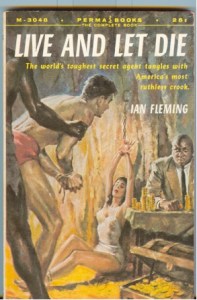 Travel issues prevented John Honey, of Hawai’i Pacific University, from attending the conference in person. Reading “Portrayals of Race in Ian Fleming’s Live and Let Die” from the comfort of his home, Honey wasadroit in mentioning the dehumanizing language used to describe Blacks in the novel and discusses the reasons behind Ian Fleming Publications decision to re-issue the Bond titles with selected edits. (Ed. Note: more on that decision below). But Fleming’s descriptions of Black language and manner are not all derogatory; as Honey noted that in the character of Mr. Big, Bond encounters a “fearsome, brilliant, and intellectual gentleman crook.” As such, Fleming’s “problematic portrayals are more accurately characterized in terms of class, not race.” Honey’s commentary on past Bond scholarship continued when he cast his eye on the 1973 EON film. Rather than follow the novel’s plot of treasure chests of gold being smuggled from the Caribbean into New York, the screenwriters turned Mr. Big into a drug smuggler, connecting a Black figure with the then current drug wars occurring in the United States. This is yet another example of Blacks being subjected to the stereotypical views of a fading, imperialistic, white supremacy. In keeping with the conference’s theme on security, Honey’s thesis is on point when he stated that the novel and film “are not the result of racist ideologies or sympathies . . . they are the result of a complex interaction within history of insecurity which intersects with race, gender, and the collapse of an empire”.
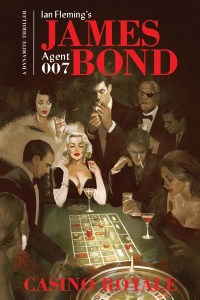 Conference co-chair Matthew Sherman concluded the first session with “Luckily, We’re Both Gamblers”, his focus on Casino Royale. Sherman is a close reader of Fleming par excellence. Writing the first Bond novel was Fleming’s attempt to address his accidie, from which he suffered throughout his life, along with his melancholic thoughts on his upcoming marriage to Ann. Sherman notes that Fleming attempted to address his spiritual sloth by confronting the deadly sins in numerous ways (not to mention later penning the introduction to a collaborative work on the seven medieval sins) in both athletic and literary pursuits. Sherman notes the similarities between Le Chiffre and Bond (i.e., their passion for gambling, command of world languages, their voracious appetites for women, food, fast cars, etc.). Clearly the most important similarity is accidie, which in its most lethal form, results in suicide, a word associated with seven characters in the novel. Sherman observed that there are at least 50 characteristics common to both the protagonist and antagonist. Given Fleming’s mood, at the novel’s end the convalescing Bond questions whether Le Chiffre was truly evil—Bond reflecting Le Chiffre’s, along with Fleming’s own, at times, dour outlook. Sherman’s conclusion mentions Fleming’s use of the tripartite novel structure, which I am ashamed to admit, I had neglected to see. In addition to the novel’s division into neat thirds, there is also the doubling—Bond’s Service number, Vesper Lynd as a newly christened cocktail and Soviet agent, and the nine of hearts holding two meanings— “a whisper of love, a whisper of hate.” Matthew Sherman’s paper is in the lyrics of a popular musical, a “singular sensation”.
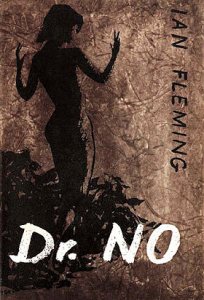 The second conference session began with Heather Craddock’s “Ecological and Botanical Insecurity: Jamaican Plants and Plantations in Dr No and The Man with the Golden Gun. As is the case with Lucas Townsend, her fellow student at the University of Roehampton, Craddock kindly shared her slide presentation and abstract, as the paper is under publishing consideration. To Craddock, the British government sought to exploit Jamaica by improving its agricultural industries. Fleming’s Bond thought that Jamaica was both beautiful and “one of the most fertile islands in the world.” Craddock skillfully notes the ways in which horticulture and agricultural products are seen in Fleming—from the “sugar and ackee and cocoa bean” of the “Dr No” song, “Underneath the Mango Tree” to the devastation caused by sugar cane field burning by Scaramanga in The Man With the Golden Gun. Craddock reminds us that Bond appears as a “Jamaican plantocrat” in Casino Royale, and Bond narrowly escaped being poisoned by the gift of native Jamaican fruit in Dr No, fruit certainly nourished by the guano harvesting on the island, which in one of Craddock’s colorful (and humorous) slides, was also touted as the best fertilizer for cotton plantations in America in the mid-19th century. The flora, fauna, and indigenous crops of Fleming’s Jamaica, as explored by Craddock, along with the economic insecurities associated with crop disruption, made this presentation another highlight of the conference. Writing this, I’m reminded of, yet another food insecurity explored by Fleming—the biological war that Blofeld plans for the U.K. and Eire in On Her Majesty’s Secret Service.
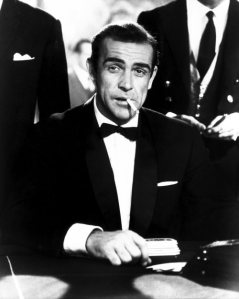 Independent Scholar and stalwart contributor to Bond studies, Andrew Wright, shared his thoughts on the sartorial Bond in “There are Dinner Jackets and Dinner Jackets: Bond’s Contradictory Appearance”. Wright noted that a character who has over a 60-year film history has undoubtedly had to change with the times, but those changes have often conflicted with the public image associated with one of the most recognizable characters in cinema. While Bond would normally wear a suit on assignment, or camouflage for more daring exploits, Wright scored a bullseye when he stated, “What sustains the fantasy of James Bond is that he is unrecognizable without his tuxedo, giving a new twist on the naked emperor who no longer struts confidently but finds himself cast outside the visible frame.” Wright, in keeping with the conference theme, discussed surveillance and security within Bond’s world. 007 is under surveillance in From Russia, With Love” “Goldfinger” “Dr. No” “Live and Let Die” and “Die Another Day” among Bond films. Bond watches but he is also being seen. According to Wright, “Bond’s position is [not necessarily] relative to the observer but rather that he is doubled no matter who is watching”. I gloss over Wright’s deeper insights here (pun intended) but his argument is surely buttressed by Laura Mulvey’s, “Visual Pleasure and Narrative Cinema”. Whether a “stupid policeman” or a “blunt instrument” what is within the celluloid frame of a Bond film does not necessarily lessen the importance of what lies out of it.
Two of my best Nichols College students, Sofia Leonardi and Enzo Matos, spoke to the assembly on Zoom from a Massachusetts dormitory room. Their paper, “Why Shouldn’t Classics Suffer from Metamorphosis?” was inspired by the class they took with me on the “James Bond Experience”. Brazilian Leonardi and German Matos, offered their views on the editing of the Bond thrillers by Ian Fleming Publications, echoing my own shared thoughts on the damage done to Fleming, part of a class discussion on the issue. What these young scholars agreed on is that they did not want their sources whitewashed. They understand that erased discriminatory language also means that “the Bond novels have lost part of their identity due to the censorship”. They continued their argument by relating censorship issues with past and recent historical events that have negatively impacted their homelands. In Leonardi’s case, (without going into specifics), there has been a silencing of the press and “just like sensitivity readers are editing the past, history is under metamorphosis in Brazil”. In Matos’s (former East) Germany, he sees the rise of the radically right Alternative fur Deutschland (AfD) party promoting and capitalizing on anti-democratic dissatisfaction, a concept promulgated by lies and deception. They called out sensitivity readers as a “parasitic infestation in the publishing world”.
E. Philip Julien, a graduate student at Morgan State University, began the final conference session in an impromptu manner, his paper recently lost in hyperspace, by relating his own history with James Bond, seeing the films with his father as a youth, to later reading the novels as a young adult, before turning his critical gaze on the novels and films as they have grown in cultural importance. While we are separated by a generation, I found myself nodding in agreement as he told the story of how he became a Bond enthusiast, and the connections the Bond stories have had between fathers and sons. It was a fitting tribute to that familial “bond”. Equally touching was the fact that Julien’s thesis advisor was in attendance for his talk.
My paper, “007’s Diluted Martini” reiterated much of the media chatter that was the result of Ian Fleming Publications decision to bowdlerize Bond. While some of the material was previously addressed in the conference, I posed the following question: “How can a character with a license to kill now appear with a trigger warning?” In presenting my argument why Fleming deserves to be read as written, I relied on the comments of Anthony Burgess and Ken Follett, both of whom wrote introductions to the novels. I followed up with more contemporary insights on the dangers of editing literary works. Contributing opinion writer for the New York Times, Matthew Walther, (a fitting Bond name) suggests “that copyright owners adopt a “curatorial responsibility” for future publishing endeavors. ‘Owning’ works of literature, should be comparable to a museum’s ownership of a Caravaggio. Clarify and contextualize, promote and even profit—but do not treat art like you would your controlling interest in a snack foods consortium”. It would, to my thinking, have been enough to offer the disclaimer that appears on the copyright page of the Bond reissues. I can accept and tolerate that. But rewriting Fleming is toxic to his scholars and devoted fans.

Illustration © 2020 Fay Dalton from The Folio Society edition of The Spy Who Loved Me
The penultimate paper, “STDs and Pregnancies: The Unexplored Risks of the Bond Life” was presented by the world’s foremost scholar on The Spy Who Loved Me, Frieda Toth. Toth’s paper, both tongue in cheek and matter of fact, discusses Bond’s satyriasis. (OK, dear reader, I had to look it up.) Toth argues that while Bond was known for being prepared (learning to card sharp, shooting range practice, physical training regimens prior to assignment) he wasn’t known to carry a prophylactic in his wallet. He conducted his affairs as if STD’s were a thing of the past. But sex in Fleming’s (and Bond’s) world was far more complicated than that. Fleming contracted gonorrhea as a teen, and he fathered two children (one stillborn) with Ann Rothermere, evev impregnating her prior to their wedding. Fleming’s half-sister, Amaryllis, was the result of an affair his mother had with painter Augustus John. As a London gadabout, Fleming had frequent sex in his London flat, offering women scrambled eggs and sausages as an inducement to his bed. Curiously, Toth does not mention Fleming’s (and Ann’s) sadistic interest in spanking as a prelude to sex. And I’ll also disagree with Toth’s description of Bond as “the world’s greatest lover”. She correctly notes that the literary Bond averages one affair per novel. Consequently, James Bond, while adroit as a lover, is no Casanova. Her frank discussion of syphilis’s danger mentions “saddle nose, a condition in which the bridge of the nose collapses”. Due to a sporting accident at Eton, Fleming had a metal plate inserted in his nose which contributed to the frequent headaches he had throughout his life. Yet no mention is made of Bond’s nemesis, Blofeld, who (sharing the same birthdate as Fleming) has a syphilitic nose infection in On Her Majesty’s Secret Service. Toth is a skillful reader and her commentary on the sex acts and their aftermath in TSWLM is especially informative. The humor inserted into the admittedly serious subject area was welcome, making it the most health-related and humorous (“Keeping the British end up, Sir”) paper of the conference.
 Oliver Buckton, conference co-chair, and author of the Fleming biography The World is Not Enough, concluded the presentations with his ‘“Nothing more up my sleeve’? Fleming’s Insecurities, Bond’s Future”. Buckton’s insight into Fleming’s insecurities as a writer was on full display. Even with his promise to Robert Harling, a friend and member of the wartime 30AU Commando Unit, that Fleming would someday write “the spy story to end all spy stories”, Fleming was often at odds with how to top himself, especially in the creation of his villains which, as Ann S. Boyd notes “The one thing which Bond has which completely overshadows all the others is his repertory of villians—his honest-to-goodness, larger-than-life villains which he must encounter and destroy”. Fleming never had to venture far to find his critics; from his own London parlour as discussed in Lucas Townsend’s paper, to the apparently friendly, but very real sibling rivalry he had with his older brother, Peter; to that of Michael Howard, Cape’s editorial director, who never wanted to publish Casino Royale in the first place. Endorsements from Raymond Chandler, and later, John F. Kennedy, not to mention the success of the first Bond films, helped encourage Fleming to finish the race, as he did in the famous picture where he wins one (albeit bloodied) at Eton. Cleverly, Buckton moved on to discuss how the literary Bond apparently got a new lease on life with the 2023 reissue of the novels on the 70th anniversary of Casino Royale’s publication. Buckton is at his snarky best when he suggested that the publishers hold “a séance in order to ask James Bond what he thinks of the reissued novels?” And then there is the challenge of the 2:43 minute “No Time To Die”. Buckton stated that there is “plenty of time to die” in the film—the longest in the series. Having done so, we are told that “James Bond Will Return”. How? Buckton wonderd if the future Bond will bear any resemblance to Fleming’s creation. Will he be an avatar or the product of an AI generated script? CGI is already an all-too-common feature of the films. Buckton’s was a clarion call of concern for Bond’s literary and cinematic future. Perhaps James Bond will decide that his world is enough and that he has had enough. For me, I hope that there is one more nine of hearts left in that casino shoe.
 I would be remiss if I did not comment on the conference’s final outing—a private room dinner at a trattoria near the Atlanta conference center. A five-course meal was preceded by an open bar, where to my amusement, the skilled serving staff had to scour the entire restaurant for enough martini glasses to quench the thirst of the assembled Bond lovers. The guest of honor was none other than Trina Parks, the “Thumper” of Diamonds Are Forever (Hamilton 1971). Parks, in attendance with her daughter and granddaughter, amused us with stories from the shoot. I was amazed to learn that she had no idea who Sean Connery was when she was cast in the role. I remember Frieda Toth, appearing in charming cosplay as Thumper’s assistant, Bambi. I won’t forget the true bonhomie of the attendees, extending the evening and Bond talk for as long as possible before we parted to go on our separate missions to corners around the world. And I remember dining next to Matt Sherman, genial host and organizer of the dinner, who welcomed me with open arms, as a first-time visitor, into the extended James Bond family.
On behalf of the SAMLA organizers, please consider joining us at the next conference to be held in Jacksonville, Florida in November 2024.


 Artistic Licence Renewed