By Revelator
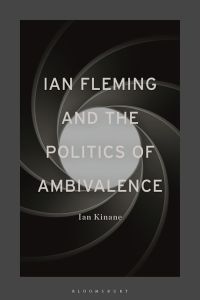 In the wake of the controversy caused by the redacted editions Live and Let Die and other James Bond novels, now is a good time to examine an academic study released not long ago, Ian Fleming and the Politics of Ambivalence. Written by Ian Kinane, editor of the International Journal of James Bond Studies [https://jamesbondstudies.ac.uk/], it focuses on representations of Jamaica and British-Jamaican relations in three Bond novels.
What Fleming was ambivalent about was Jamaica achieving independence from the UK. Kinane argues that “Fleming’s reputedly staunch imperial politics sits uneasily with what I argue to be an implicit resistance within his literary works to ‘simple’ racism or a reductive imperial rhetoric.” In dealing with Fleming’s racial attitudes and complex representational politics, Kinane wishes to avoid both dismissive condemnation and uncritical leniency. Fleming created “pseudo-imperial fantasies” in his Jamaica-set fiction but he also tried to represent the island with some degree of veracity to his intended audience of British readers. Over the course of the books, Bond goes from an imperial policeman at ease in an imperial colony to an uneasy but defiant defender of waning British power in an age of decolonization.
After a lengthy and digressive introduction, dealing with critical writing on Fleming and with Fleming’s nonfiction writing on Jamaica, the book analyzes the three Jamaica-set Bond novels, starting with Live and Let Die. This now notorious work “contains many questionable assumptions about race and African Americans” but displays “a particular ‘blurring’ or harmonizing of racial conflict and racial identities through Bond’s meditation on the condition of race and on the politics of Black power.”
Kinane says “the novel does not disparage Jamaicans as ‘bestialised natives’.” Perhaps, but Fleming does produce sentences about “the fear of Voodoo and the supernatural, still deeply, primevally ingrained in the negro subconscious.” And the treatment of African Americans is at times worse than disparaging (after Felix Leiter gets captured Bond worries about him “in the hands of those clumsy black apes”). Nor can one forget the white American policeman who says race riots are caused by voodoo rather than discrimination: “When they’re full of that stuff we all know what happens. Remember ’35 and ’43?” Fleming draws a connection between powerful African Americans and communism that was regularly made by certain white Americans to discredit the civil rights movement, as in J. Edgar Hoover’s belief that Martin Luther King was a communist agent.
Yet Live and Let Die also shows a genuine (albeit self-contradictory) affection for African American culture. Kinane argues that “the most pernicious considerations of Black culture” come not from Bond but Felix Leiter, who fancies himself an expert on African Americans.
Here I would point out that while modern readers certainly find Leiter condescending on this topic, I’m not sure Fleming intended his audience to find Leiter’s comments pernicious. Across the span of the Bond novels Leiter comes across as one of the most likable, reliable and trustworthy characters (given a choice, most readers would rather have a drink with him than Bond). It’s more likely that Fleming meant his readers to take Leiter’s remarks—not just on African American culture but almost everything else—at face value.
Kinane takes a commendably thoughtful approach to the infamous original title of chapter five and the conversation between the African American couple at Sugar Ray’s. He explores the ambivalent relation between the chapter title and the Carl Van Vechten novel Fleming borrowed it from. As for the couple, Kinane rightly observes that African American sexuality is not exoticized or held up for condemnation by Fleming “but celebrated for its frankness, its lack of shame and for its contrast to conservative British tastes.” Bond and Fleming display an “unrestrained appreciation” unhindered by racial politics. The same goes for the depiction of exotic dancer G. G. Sumatra in the Boneyard nightclub: her “body is neither in the throes of Voodoo possession nor possessed by Bond’s imperializing gaze.”
Kinane views Bond’s thoughts when entering New York—“Here in America, where they knew all about him, he felt like a negro whose shadow has been stolen by the witch-doctor”—as part of an unusual alignment between Bond and the African-American community, based on surveillance practiced by and upon both parties through the presence and power of Mr. Big. In a fine bit of close reading, Kinane observes that Fleming twice uses the metaphorical phrase “the debris of his black skin” to describe Bond after the loss of his wetsuit.
Live and Let Die is “saturated with images of death and bodily decay,” from Mr. Big’s gray skin onward, though “as Bond moves from Florida to Jamaica, he can be seen to transition from a space of death to one of revivification.” Quarrell says Bond and the Undertaker’s Wind have the same job: in Kinane’s view this casts Bond as a force of nature that justifies Britain’s hold over Jamaica by cleansing it of the illness of communism.
Mr. Big poses as the undead corpse of Baron Samedi to create a “symbol of Caribbean resistance to Britain’s colonial economy.” He spreads Bloody Morgan’s pirate treasure across America not just to finance the Soviet espionage system but also to commit “an act of financial reparation or redistribution of reappropriated imperial gold among its rightful, disenfranchised Black inheritors.” This scheme is “never expressly vilified within the narrative,” and Kinane quotes as evidence a powerful passage from chapter 20, when Bond imagines the thoughts of the Jamaican fisherman who discovered the treasure: “He would need help to dispose of it. A white man would cheat him. Better go to the great negro gangster in Harlem and make the best terms he could. The gold belonged to the black men who had died to hide it. It should go back to the black men.”
One issue Kinane skims over is the racial hybridity of Mr. Big and Quarrel, the novel’s most prominent black characters. I would have liked further exploration of Fleming’s conflicting account of how much Mr. Big’s criminality stems from his being half-white, and the implications of Quarrell having “the blood of Cromwellian soldiers and buccaneers in him.” Cromwell was the British conqueror of Jamaica, so what does it mean for his troops to live on through Quarrell?
Kinane’s second chapter—covering Dr. No, Fleming’s first book set predominantly in Jamaica—feels more diffuse, as if he had some difficulty in consolidating his thoughts. The years after Live and Let Die saw increased nationalist agitation in Jamaica, alongside British fear of racial and political uprisings. Consequently, “Dr. No is replete with scenes of complicated border crossings and transgressions of boundaries that are characterized by images of penetration and violent intrusion.” This, according to Kinane, was part of Fleming’s “ambivalent and reactionary” response to the prospect of decolonization.
Those Boundary transgressions include not just Bond’s literal border crossing into Jamaica but also the use of animal imagery to describe humans; episodes of provocative inter-racial violence; the racial hybridity of Dr. No and the“chigroes”; cultural hybridity, as in Honey Rider, a wild child and Jamaican Creole; and the stretching of the limitations of the human body. The latter encompasses Bond’s extreme torture ordeals and the freakish Dr. No’s status as a “transhumanist aberration.”
Fleming’s focus on his character’s bodies ties into white fears of racial miscegenation. This is seen in the negative portrayal of Jamaica’s Black Chinese community as brutal “chigro” thugs, employed by Dr. No to murder whites. The collective “Chigro” body “is made to shoulder the weight not only of Jamaica’s colonial heritage but also of Dr. No’s crimes,” and so it takes a good deal of lethal punishment from Bond.
For Kinane, Dr. No takes “a scornful view of Jamaican national self-determination” but is “highly critical of Britain’s colonial administration.” The Acting Governor comes off as a pompous, incompetent timeserver, held in low regard by law enforcement and the armed forces. Without the services of someone like Bond, Jamaican independence would be self-inflicted wound to Britain, brought about by colonial own mismanagement.” Bond’s final desire “to get the hell away from King’s House” and all its associations is interpreted by Kinane as distaste and disengagement from colonial administration.
The book’s opening also demonstrates Fleming’s “restrained contempt for
Jamaica’s colonial culture” in its descriptions of Rich Road, the avenue of the Governor’s House, Queen’s Club, and many other white elites. Fleming’s prediction of the destruction of the Queen’s Club casts “considerable doubt as to the longevity of the very political system James Bond is tasked with ordering—and by which he himself is ordered.” And the murderous intrusion into Rich Road of the three “Chigro” assassins disguised as blind beggars is another boundary crossing, one that raises the fears of racial violence and the disruption of the old colonial order.
Kinane reads Bond’s rescue of Honey as an ideological retaking of Jamaica by the British. He considers the conflict “between Honey’s subordinate childlike mentality and her dominance and independence” as metonymic of Fleming’s apprehension of Jamaican independence. Bond’s reactions to Honey’s broken nose become supposedly indicative of Bond’s desire “to preserve the political status quo in Jamaica.” The idea is too strained to be convincing.
Chapter three deals with The Man with The Golden Gun, written after Jamaica finally gained independence and deemed by Kinane the “most reactionary” of the novels under discussion. “Fleming never quite manages to reconcile his love for Jamaica with the cultural politics of post-imperial Britain,” and his derisive treatment of Jamaican authority figures demonstrates his inability to deal with Jamaica’s independence. Bond and the UK use the threat of the Russians to justify continued spying and interference with the island’s affairs.
Kinane considers the brainwashed Bond’s speech to M to be “an explicit resistance to the political machinery” that Bond “is employed by and operates within,” and thus “a rare instance of Fleming’s uncommonly brazen (and unambivalent) indictment of Britain’s imperial heritage.” But in this scene Bond is doing nothing more than parroting Soviet boilerplate; the script he has memorized is transparently insincere—who in his right mind could believe the Soviets would scrap the KGB as soon as Britain junked the Secret Service?
After Bond’s recovery he represents the UK’s weakened status in the Caribbean, in Kinane’s reading. Bond’s fumbled attempt to kill M stands in weak contrast against Scaramanga’s golden gun and phallic power. Scaramanga, driven by profit and backed by communists, has free run of the Caribbean, while patriotic Bond is confined to Britain’s former colonies. 007 consoles himself by betting the statue of Queen Victoria still stands in Kingston, since the Jamaicans might feel some ambivalence of their own regarding decolonization.
The seedy bordello on Love Lane represents the ruins of imperial Jamaica, whereas Scaramanga’s new hotel, the Thunderbird, represents Jamaica’s economic emergence “from the ruins of empire.” There Bond tries to impress the clientele by orchestrating a near orgy of “cultural exoticism,” directing the striptease of a multi-racial dancer and reenacting “the historical subjugation of indigenous femininity to white, male coloniality.”
Kinane, like several other scholars, devotes much attention to the Jamaican policeman who’s first on the scene after Scaramanga’s demise. In this interpretation, Fleming presents the policeman as inept and childlike, yet another example of a hapless Jamaican who comes up short against the mature, wise British—yet another emblem of the sad state of postcolonial Jamaica.
I’m not so sure. Arguably, the policeman is not inept at all. He continually demonstrates good sense. He tries to get other policemen to go with him after learning Bond and Leiter are secret agents. Having to go alone, he’s “conscious that his black-and-blue uniform was desperately conspicuous,” and being unarmed he stalks “cautiously from clump to clump into the morass.” He sees Scaramanga’s shirt through the trees and waits to enough to determine there’s no movement or sound before emerging. Seeing Bond and Scaramanga’s bodies, he immediately calls for help. Pretty good for a local policeman inexperienced in dealing with Bond’s brand of chaos! Fleming even sees to it that the policeman is commended by name in the Commissioner’s report. “Constable Percival Sampson of the Negril Constabulary” (naming him after a Grail knight is a nice touch).
One should also point out Fleming’s positive portrayal of the Resident Medical Officer at the Kingston hospital, “a young Jamaican graduate from Edinburgh” who praises his fellow doctor at Savannah La Mar for giving Bond the anti-snakebite injections that saved his life. The latter doctor is also commended and named (Lister Smith) by the Commissioner. So as an independent nation, Jamaica can look with some pride on its police and doctors, for without Percival Sampson and Lister Smith James Bond would be dead.
Kinane believes the book’s “neo-imperial ideology” comes through in the judicial inquiry held near the end of the novel, when “Fleming makes nothing less than a mockery of Jamaican independence, painting the island out to be a corrupt modern economy susceptible to bribery and gambling.” The Jamaican authorities acquiesce to British interference and secure Bond’s silence by giving him a police medal, underscoring the inability of post-colonial Jamaica to manage its affairs without British intelligence.
But here there is also room for ambivalence. Consider Leiter’s response to the inquiry: “Well, I’ll be goddamned, James. That was the neatest wrap-up job I’ve ever lied my head off at. Everything clean as a whistle.” The Jamaican government has clearly impressed, surprised, and gratified Leiter (and by extension the reader) with its cleverness. In hushing up the Scaramanga affair, the government has appropriated Bond and Leiter’s efforts as those of “Jamaica-controlled agents.” The foreign gangsters get taken off Jamaica’s hands, and Jamaica gets to take all the applause. Any government that can pull off such a great wrap-up job can’t be all bad.
Kinane’s final chapter, “Jamaica on screen,” examines and reviews critical writing on the Bond films, so it lies mostly outside the purview of this website. He notes how the screen version of Quarrel is “a caricature of his soulful literary counterpart” and a stereotype of black fearfulness. He also points out that “the representation of Government House in Jamaica” is “afforded far greater deference by the filmmakers than by Fleming.” The film of Live and Let Die is shown to have its own racial problems, though I would observe that Rosie Carver’s incompetence may owe less to racial factors than to the persistence of bimbo characters in every Tom Mankiewicz/Guy Hamilton Bond film.
Ian Fleming and the Politics of Ambivalence references and overlaps Matthew Parker’s excellent Goldeneye: Where Bond Was Born, but Kinane’s book is written for an academic audience. This unfortunately will limit its reach, and non-academic readers may find some passages puzzling (for anyone wondering why Fleming is called a “thorough orientalist” when dealing with Caribbean subjects, it’s because Fleming describes Jamaica with authoritative exoticism). But unlike many academics, Kinane’s prose is dense but comprehensible, and when engaging in close readings of Fleming he’s genuinely insightful. Furthermore, his book demonstrates excellent command of secondary sources and recent critical writing; it has a valuable bibliography that will readers to the library. Readers should also not skip the lengthy endnotes (some should have been incorporated into the main text).
Kinane’s judgments are usually sound, though I did raise my eyebrow when he deemed O. F. Snelling’s 007 James Bond: A Report superior to Kingsley Amis’ James Bond Dossier and called The Spy Who Loved Me “altogether derisible.” Quibbles aside, his book exemplifies the sort of study I hope more academics will produce. It tackles some of the thorniest topics surrounding Fleming’s work with fairness, sensitivity, and erudition.


 Artistic Licence Renewed